A Flexible Daily Time-Blocking Worksheet
Time blocking means giving an activity a place in the day rather than leaving every task on an undated list. It can help you notice competing commitments, but it cannot make an overloaded day fit. Treat the worksheet as a draft that changes with real conditions. The example below is an organizational exercise, not a promise that one planning method works for everyone.
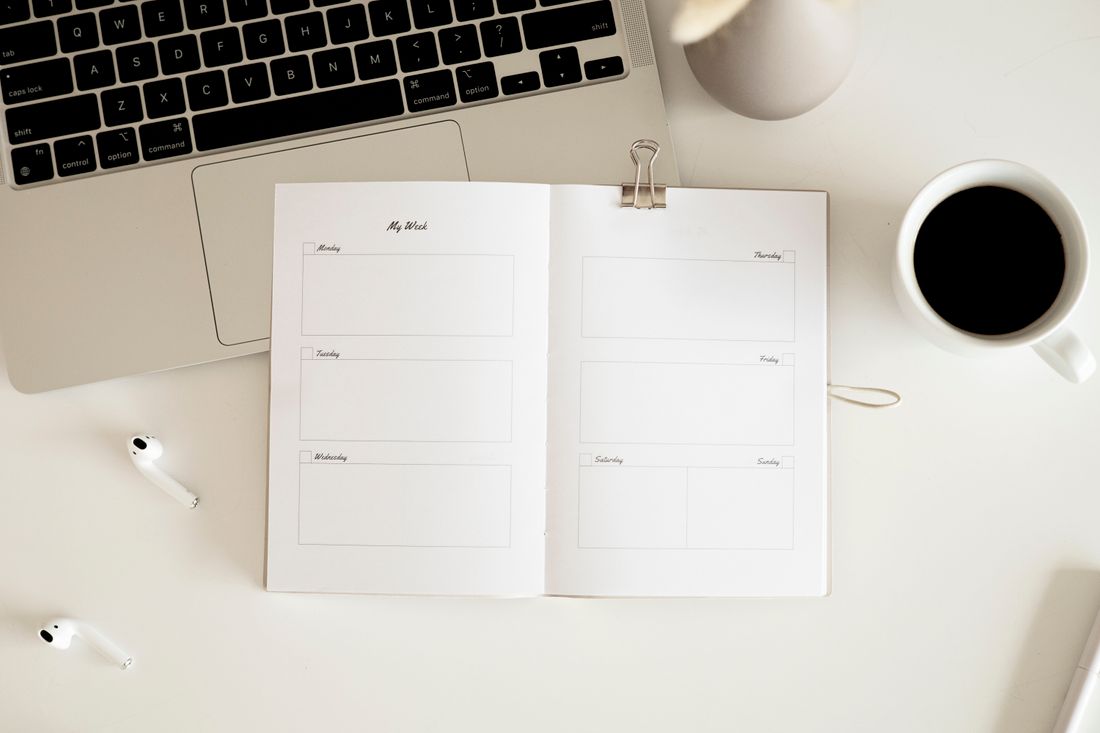
Photo: Hanna Pad · License. Illustrative stock photography.
Separate timed commitments from flexible tasks
Begin with events that must happen at a particular time, such as a class, shift or scheduled call. Then list work that can move, including writing, errands and administration. Add necessary preparation or travel. Distinguishing the two types makes replanning easier: a delayed writing block may move, while an appointment may require contacting someone. Do not place flexible work over a commitment and assume you will somehow do both.
Choose the most useful task for each open block
Look at the remaining time and select tasks that can reasonably start there. A short gap may suit confirming an appointment rather than beginning a large report. A longer uninterrupted period may suit focused drafting. The worksheet does not need to classify your entire personality or energy pattern. Begin with practical observations about when interruptions usually occur and adjust the plan after seeing what actually happens.
Write blocks as actions with an endpoint
Replace project work with draft the first two sections, and replace admin with reply to the three messages awaiting a decision. A visible endpoint makes it easier to stop, assess progress and choose the next action. If the endpoint is uncertain, label the block as exploration and record the question you want to answer. Not every task needs a precise estimate, but each block should have a recognizable purpose.
Build a fictional day before copying the method
For example, a remote worker might plan an existing morning call, a drafting block, a break, a short administration period, lunch and an afternoon review. Travel to a later appointment occupies its own space. The blank area before the appointment remains a buffer rather than becoming another demanding task. Your page may look completely different. The example demonstrates sequencing and transition time, not an ideal routine or a required working schedule.
Use a simple rule when the day slips
When something takes longer than expected, stop and inspect the rest of the day. Decide whether to shorten the current task, move a flexible block or defer an outcome. Keep fixed obligations visible. Avoid shifting every later block automatically, because that can quietly eliminate breaks or create a conflict with another person. Write one change clearly and preserve the original purpose of the day where possible.
Review the plan as an estimate
At the end, compare planned blocks with what occurred. Note tasks that needed preparation you had not counted, interruptions that repeated or blocks that were too small to begin useful work. Use those observations to make tomorrow's plan more realistic. You do not need to record every minute. A few useful notes about capacity and sequence are more valuable than a detailed log you never have time to review.
Your working checklist
Checkmarks stay in this browser when storage is available. They do not submit a form or complete a booking.
Put it into practice
- Place fixed commitments first and include travel or preparation that affects the schedule. Keep uncertain events labeled as tentative rather than treating them as confirmed.
- Choose the main outcome for the day and break it into actions that can fit the available blocks. Use clear endpoints so you can assess what was accomplished.
- Add flexible tasks and leave transition space. If the page is full before everything fits, defer or reduce something explicitly instead of writing a schedule that depends on doing two things at once.
- When conditions change, revise the remaining blocks deliberately. Finish with a brief note about estimates or interruptions that should influence the next day's plan.
Before you finish
- Confirmed commitments are placed before optional tasks.
- Travel and setup are visible when relevant.
- Blocks name specific actions or questions.
- No task depends on occupying two places at once.
- Transitions and ordinary breaks have space.
- Changes are recorded without treating the first draft as a failure.
Common questions
How long should a block be?
Match the block to the task and the time you actually have. A short administrative task and a complex draft need different treatment; there is no single duration you must use.
What if I cannot control my workday?
Block only the time you can influence. Use the worksheet to see fixed demands and select a few next actions, rather than pretending every hour can be protected.
Should I track planned and actual time?
You can compare them when estimating is difficult, but detailed tracking is optional. Record only the information that helps you make a better decision about future capacity.