A Monthly Review That Leads to Better Next Steps
A monthly review is a short pause to examine what happened and choose what comes next. It is not an annual performance appraisal compressed into a worksheet. Use the page to bring scattered commitments together, close work that no longer matters and identify a realistic focus. The most useful review produces a few decisions, not a beautifully completed archive with no effect on your calendar.
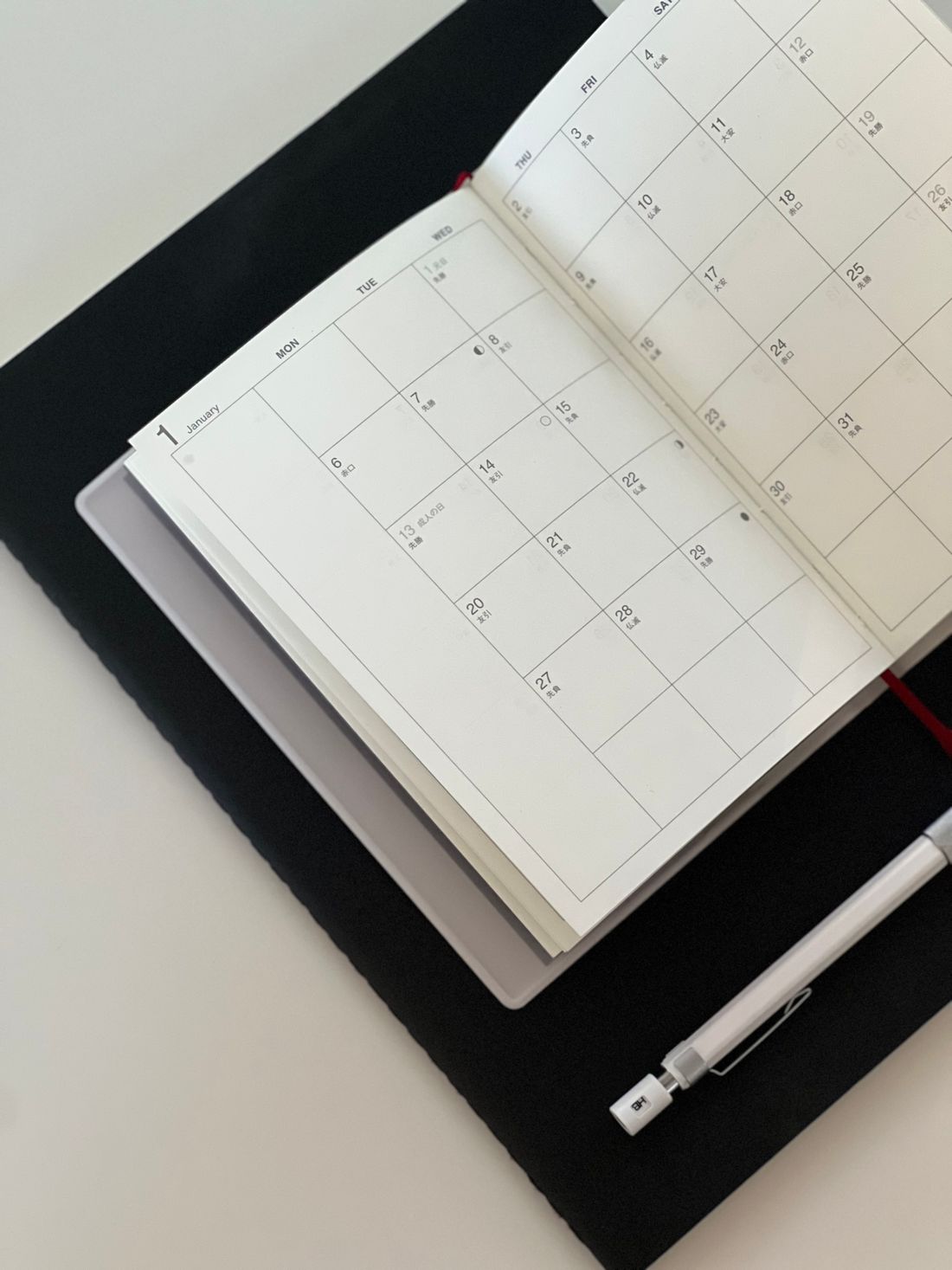
Photo: Natalia S · License. Illustrative stock photography.
Collect a small amount of evidence
Look at your calendar, active project list and recent notes. Identify meaningful completed work, important events and commitments that changed. You do not need to reconstruct every day. A simple factual record helps counter the tendency to remember only the most recent frustration or success. Write finished proposal, completed appointment or postponed room project rather than broad judgments about whether the entire month was good or bad.
Separate completed work from ongoing responsibilities
Some activities have a clear finish, while others continue: maintaining records, attending classes or handling household administration. A review that counts only finished projects can overlook this ongoing work. Give it a small space on the page, then ask whether it needs a better process or a more realistic time allowance. The purpose is to understand capacity, not to convert every routine responsibility into a new ambitious goal.
Examine unfinished work without copying it blindly
For each unfinished project, choose continue, change, pause or close. Write why. A project may be blocked by information, too large for the time available or no longer useful. For example, a fictional home-office project might be paused until the room dimensions are confirmed, while an overdue document update becomes next month's first action. Decisions make the review useful; copying the same list into another month does not clarify the problem.
Use an example to make the page concrete
A fictional review could record a finished portfolio draft, two completed administrative tasks and a postponed weekend trip. The main lesson is that evening work blocks were often interrupted, so next month the writer schedules one earlier session and reduces the project scope. Upcoming commitments include a family visit and a course deadline. The next focus becomes finishing one portfolio case study, rather than starting three new projects at once.
Check the next month's known constraints
Review confirmed appointments, payment or renewal dates, travel and deadlines that affect available time. Keep financial records and sensitive personal details in an appropriate private place rather than a publicly shared planner. Note what requires preparation before the month begins. A deadline near the start of the month may need an action now, while a tentative event should remain tentative until someone confirms it.
Finish with a small number of decisions
Write the most useful outcomes, the first action for each and one thing you will stop or reduce. Put those first actions into the next weekly plan or calendar. Keep the review where you can find it when making later decisions, but do not add elaborate tracking simply to complete more boxes. If a section never helps, simplify it. The review should become easier to use as you learn which questions matter.
Your working checklist
Checkmarks stay in this browser when storage is available. They do not submit a form or complete a booking.
Put it into practice
- Gather a few factual records of completed work, ongoing responsibilities and changed commitments. Avoid spending the review reconstructing every minor activity.
- Give each unfinished project a deliberate status: continue, change, pause or close. Write the reason and the next action for anything that remains active.
- Inspect next month's confirmed constraints and choose outcomes that fit around them. Mark uncertain plans clearly so assumptions do not silently become commitments.
- Transfer the first actions into your weekly plan and keep one practical lesson visible. Remove a review field if you repeatedly complete it without using the information.
Before you finish
- The review uses concrete examples rather than only impressions.
- Ongoing responsibilities are included in the capacity picture.
- Every unfinished project has a deliberate status.
- Confirmed and tentative commitments are distinguishable.
- Next month's outcomes have first actions.
- At least one lesson changes the next plan in a practical way.
Common questions
When should I do the review?
Choose a quiet point near the month's end or the start of the next month. The exact date matters less than having enough information to make the next set of decisions.
What if I did not reach my goals?
Identify what changed and whether the goals still fit. A useful review can reduce scope, remove an unnecessary project or reveal a blocker; it does not need to defend the original plan.
Should I score the month?
Only if the score helps you make a decision and its meaning is clear. A few concrete observations often provide more useful guidance than a single unexplained number.