An Everyday Decision Log: Keep the Choice, Reason and Review Trigger
A decision log records why you chose an ordinary option using the information available at the time. It helps you avoid reopening the same question without new evidence. This worksheet supports personal organization; it does not make the decision for you.
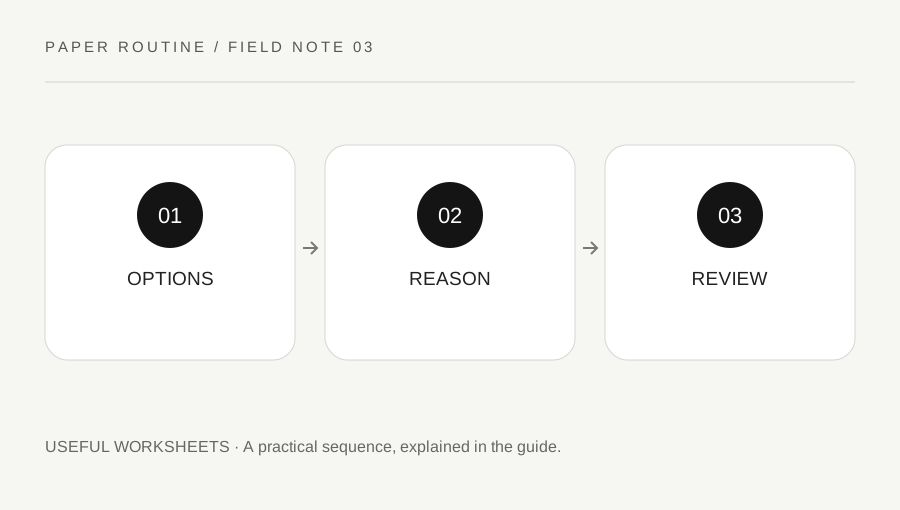
Original explanatory diagram. Examples illustrate a method or decision; they are not claims of personal testing.
Choose a decision that benefits from a record
Use the log for a choice you are likely to revisit: which room layout to try, how to organize a club session or which draft structure to use. Do not turn every trivial preference into an administrative task. Start with a clear question and the date, then note who is actually responsible for the choice.
Keep high-stakes decisions in the appropriate professional or official process. An ordinary notebook cannot replace medical, legal or financial advice, nor can it authorize a decision for another person. This guide stays with low-impact everyday examples where recording the reasoning is useful and a later adjustment is possible. The method is original editorial guidance rather than a researched claim about decision quality.
Write the relevant options and constraints
List the realistic options you actually considered. Include doing nothing or postponing when those are genuine possibilities, with their practical consequences. Add constraints that mattered, such as available space, an agreed date or equipment already on hand. Separate facts you verified from assumptions that still need checking.
Avoid assigning precise numerical scores when you have no basis for the numbers. A short comparison in ordinary language can be clearer: this arrangement preserves the walkway, while that one provides a larger shared work surface. The useful question is which difference matters for the stated purpose. Record enough detail to reconstruct the comparison without creating a long essay that nobody will review.
Show the reasoning in an ordinary example
Imagine a household deciding where to place a small craft table. Option A keeps it beside the window; option B moves it into a shared room. The group chooses A because the shared walkway stays clear and materials can remain in one place. They note that the usable light has only been observed in the afternoon, so morning conditions remain uncertain.
The review trigger is a week of actual use or a repeated problem with access. That is more specific than revisit later. If the arrangement is inconvenient, the record makes it possible to ask which assumption failed. This invented example does not claim a universally best furniture layout. It illustrates how the reason and the uncertainty can remain attached to the choice.
Keep a decision separate from its actions
Write the chosen option in one sentence, then list any next actions elsewhere or in the printable's short action field. Deciding to test a layout is different from moving the furniture or obtaining agreement from the people who use the room. A clear record should not make unfinished setup appear complete.
Note whose agreement is still needed and do not present a proposal as a shared decision. Where another person's permission or an official rule matters, obtain that through the proper process. Use a status such as proposed, agreed or superseded consistently. Clear labels support later reading, but their meaning should be explained to anyone sharing the sheet rather than assumed.
Review when information changes
At review, compare what happened with the original purpose and assumptions. Record what you actually observed, including an outcome that is mixed or still uncertain. Do not rewrite the earlier reason to make the result look inevitable. Add a new dated note and retain the original entry as context when that history remains useful.
The printable provides fields for question, options, choice, reason, uncertainty and review trigger. Print it at a readable size and keep the wording concise enough to find the key point. If the choice changes, reference the replacement entry. Close the old question when there is no useful next review, so the log remains a record of meaningful decisions rather than an invitation to reconsider everything indefinitely.
Your original printable
Download the original SVG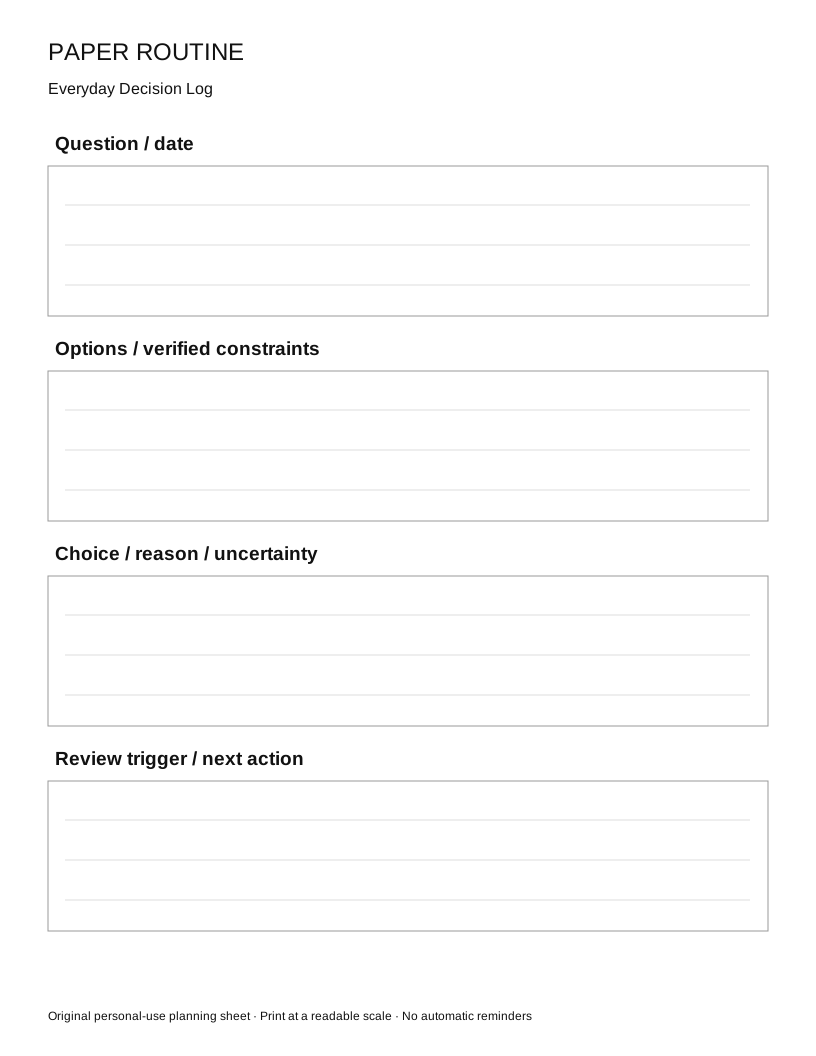
A practical checklist
Choices are saved in this browser. Reset them here or clear this site’s browser storage.
Questions that come up
Should I score every option?
Only if a meaningful scoring method helps. Made-up precision can obscure a simple comparison; clear written reasons may be more useful.
What if the decision changes?
Add a dated update and the new reason. Preserve the earlier entry when it explains the change rather than silently rewriting it.
Is this suitable for professional advice?
It is a personal organization worksheet for ordinary decisions. Use the appropriate qualified or official process for consequential matters.
References & scope
Background references checked on 18 October 2026. Worked examples and diagrams are original teaching material.