A Temporary Household Handover Sheet People Can Actually Use
When someone helps with ordinary household arrangements for a short period, a clear handover reduces guesswork. Put agreed tasks, locations and questions in one place while keeping sensitive access information in the appropriate private channel.
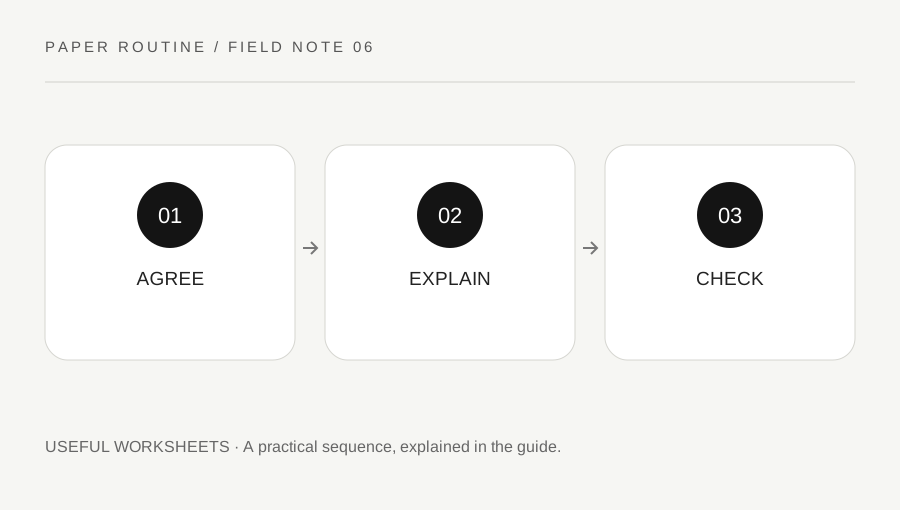
Original explanatory diagram. Examples illustrate a method or decision; they are not claims of personal testing.
Agree the scope before writing instructions
Start with the period covered and the ordinary tasks the helper has agreed to handle. Watering a named plant, putting a labelled item in a collection spot or receiving an expected parcel are different responsibilities. Do not add extra work to the page and assume acceptance. Check that the helper has the time and practical ability for the agreed arrangement.
Keep specialized care, medical support and safety-critical responsibilities in an appropriate qualified process. This worksheet covers routine household coordination. It is not a substitute for professional instructions or an agreement to provide a service. If a task needs specific current guidance, identify the actual source and discuss it directly rather than abbreviating it into an ambiguous line.
Write instructions from the helper’s viewpoint
Use plain names for locations and items: the blue watering jug under the kitchen sink is clearer than the usual jug. Describe what the helper should do and how to recognize completion. Explain an exception that is likely to matter, such as leaving a parcel collection for the named date rather than guessing from a previous routine.
Show unfamiliar items or locations before the handover when possible. Ask the helper to explain the plan back in their own words so you can spot unclear wording. Avoid turning the exercise into a test of memory. The point is to improve the instruction while you can still clarify it, not to make the other person responsible for deciphering unexplained shorthand.
Use a short ordinary example
Imagine a neighbour checking a shared entrance notice and collecting a delivered materials box during a two-day absence. The sheet gives the covered dates, the expected box label and the agreed place to leave it. The neighbour is asked to report an unexpected delivery through the usual contact channel rather than deciding what to accept on someone else's behalf.
The household demonstrates the storage location beforehand and keeps building access arrangements separate from the printed task sheet. This invented example illustrates a bounded agreement. It does not establish permission to enter property, accept a contract or perform additional work. Actual access and authority must be agreed directly with the people responsible.
Keep contacts and access proportionate
Write the appropriate contact route and when a routine clarification is expected, using only the details needed by the helper. Do not put passwords, alarm codes or unnecessary private records on a page that may be left in view. Arrange any necessary access through an appropriate secure method with the responsible people.
Distinguish an ordinary question from a problem requiring the established emergency or building procedure. Do not invent a workaround for an unfamiliar appliance, damaged fixture or unsafe situation. State the agreed stopping point and who should be contacted through the proper route. A useful handover gives the helper permission to pause and ask rather than implying they must solve every unexpected household problem.
Close the arrangement clearly
Add a simple completed or question field for each task. At the end of the covered period, review the notes together and confirm whether anything still needs attention. Return borrowed items and conclude any temporary access arrangement through its appropriate process. The worksheet itself should not be treated as evidence that access permissions were changed.
The original printable has generous task rows, a scope field and room for questions. Print one readable copy and keep it in the agreed location. Retain only the history that remains useful afterward. A handover is successful when both people understand the limited arrangement, the instructions are findable and unresolved questions have a clear next step.
Your original printable
Download the original SVG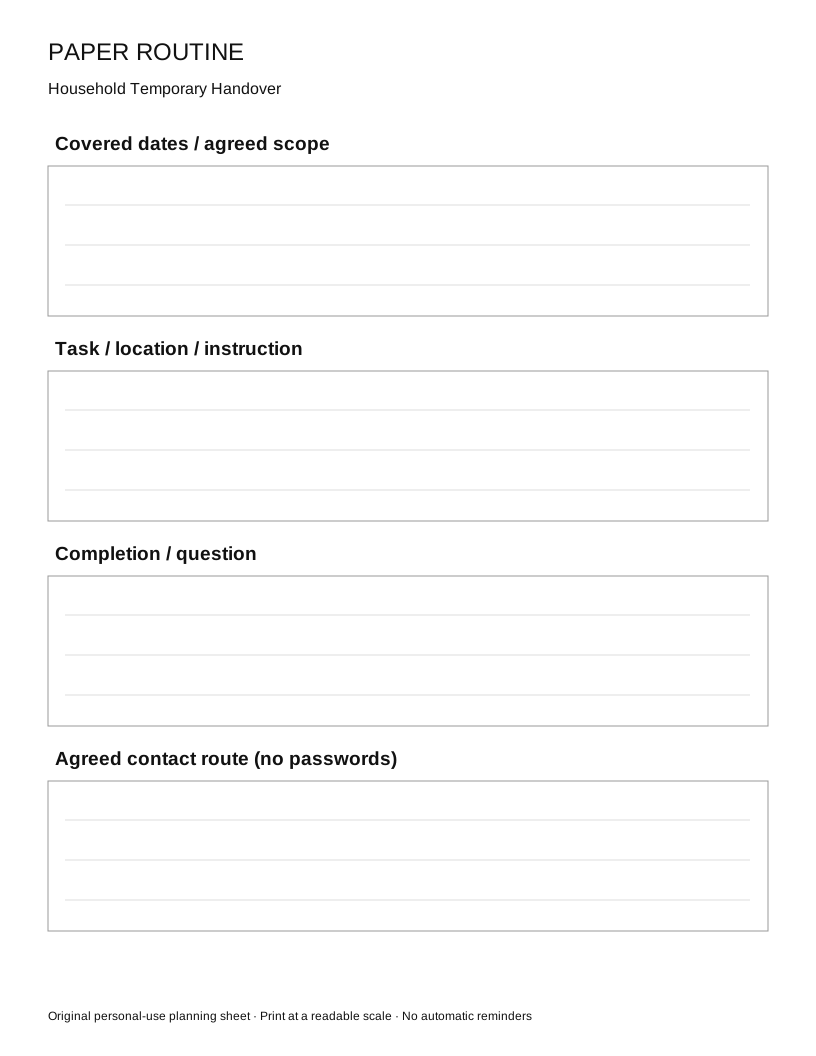
A practical checklist
Choices are saved in this browser. Reset them here or clear this site’s browser storage.
Questions that come up
Does the worksheet grant access to a home?
No. Any entry, authority or temporary access must be agreed directly through the appropriate process. A task note cannot create permission.
Should I include appliance repair instructions?
Use the actual manufacturer or qualified guidance where relevant. A routine helper should pause at the agreed stopping point rather than improvise a repair.
What if a new task appears?
Ask the helper and confirm a revised arrangement. Do not assume an existing small commitment covers additional responsibilities.
References & scope
Background references checked on 18 October 2026. Worked examples and diagrams are original teaching material.