Index a Paper Planner So Important Notes Stay Findable
A planner index connects a useful label to the page where its current information lives. Start with a small set of topics and a consistent page reference. The aim is retrieval, without turning every line you write into another indexing task.
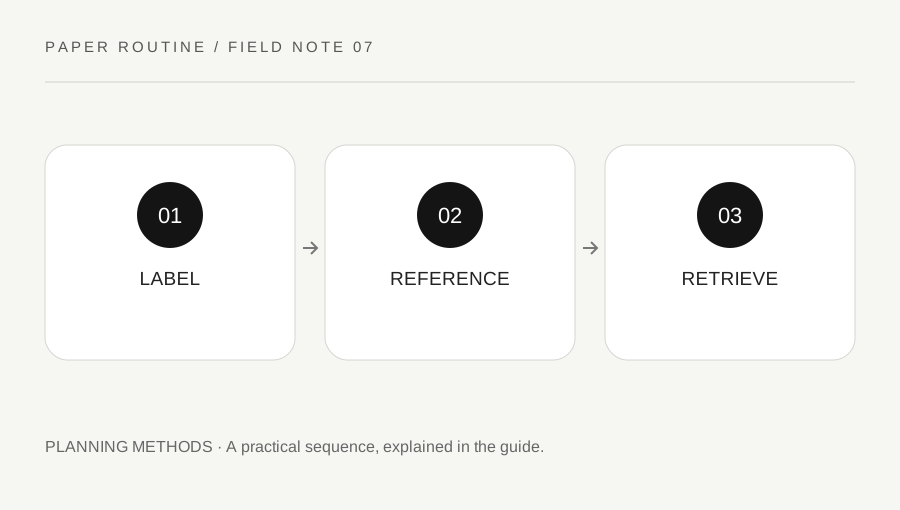
Original explanatory diagram. Examples illustrate a method or decision; they are not claims of personal testing.
Choose a page-reference system you can maintain
For a bound notebook, use printed page numbers or add a small sequential number to each page you use. For loose sheets, a short unique sheet code may work better because pages can move. Write the notebook or section identifier as well when you keep more than one active book. An index entry should point to one identifiable place.
Test the system with a real note before indexing the whole planner. Can you find the page without remembering where you were sitting when you wrote it? If not, simplify the labels or add the missing reference. This is an original paper organization method. National Archives naming guidance provides background on clear consistent identifiers, rather than a prescribed system for personal notebooks.
Index topics worth finding again
Choose entries for ongoing projects, reference notes and decisions you expect to revisit. Daily routine ticks may not need a separate index row. Use the words you naturally search for: workshop materials is likely to be easier than miscellaneous ideas. A short descriptive label should reveal the subject without requiring you to reopen the page.
If one topic spans several pages, list the relevant references in order or create a clearly marked continuation. Do not rely on an index title alone to explain whether a page is a draft or the current plan. Add a small status note where that distinction matters. Keep the index concise enough that scanning it remains easier than scanning the whole notebook.
Work through a continuing topic
Imagine a notebook with craft-session planning on page 18 and revised material quantities on page 41. The index entry reads craft session: overview 18; current materials 41. Page 18 contains a brief note pointing to the later list, so a reader does not mistake the earlier quantities for the current version.
When a later session becomes a separate project, the owner gives it its own label rather than adding an endless list of page numbers under one vague heading. This invented example illustrates how a small qualifier can communicate the relationship between pages. The index is a map to information; it does not make old instructions current merely by preserving their location.
Handle migration without copying everything
When moving to a new notebook, review which references are still active. Copy only the information you need in the new book, or retain a clear reference to the archived notebook when it will remain accessible. Check the copied material against its source and mark it with the date of the move. Do not silently present an outdated draft as a newly verified plan.
Use one current reference for a changing list wherever practical. If you keep paper and digital copies, explain which one controls the current version. The index can point to an external file using a meaningful filename or folder description, but avoid writing private login details into it. A retrieval aid should not become an insecure collection of access information.
Use the blank index and test retrieval
Download the original index sheet below. It has columns for topic, location, status and update note, with room to add several related references. Print a readable copy or draw the same fields inside the cover of your notebook. Keep it with the planner so finding the index does not become a separate search problem.
After adding a few entries, close the notebook and try finding one important note from its label alone. Clarify any entry that sends you to several indistinguishable pages. Review the index when a project ends or a notebook changes, instead of rewriting it for appearance. A useful index earns its place by making a real later question easier to answer.
Your original printable
Download the original SVG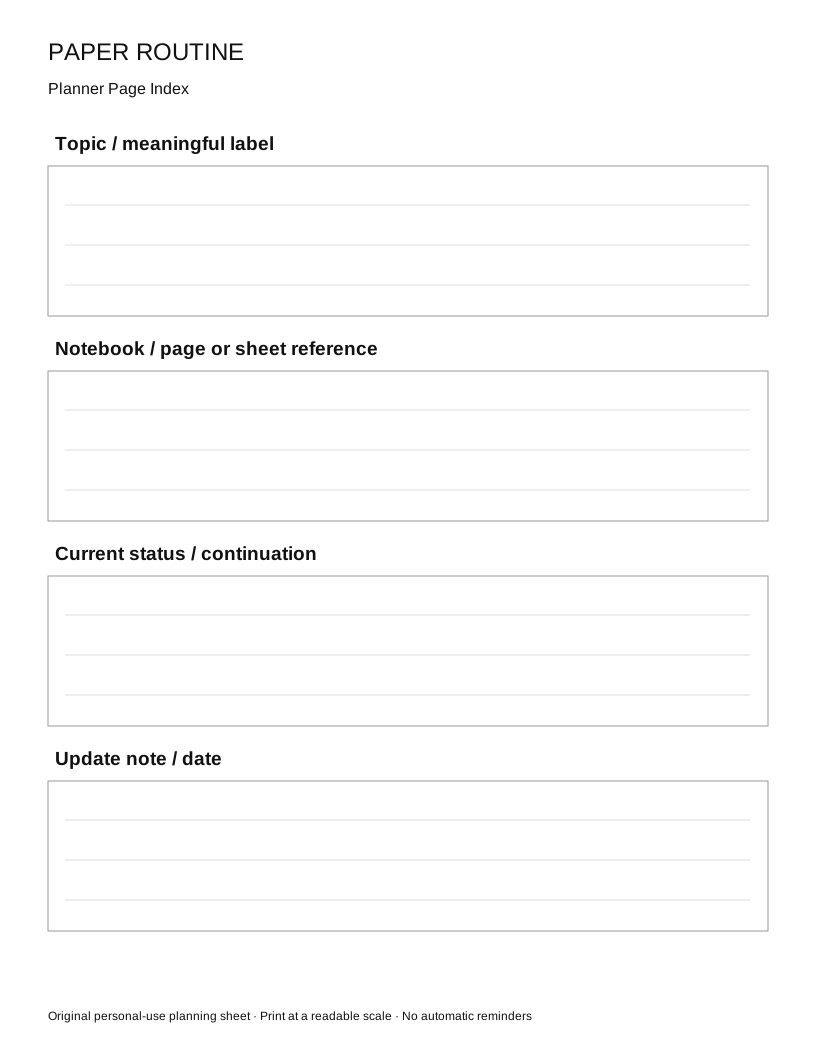
A practical checklist
Choices are saved in this browser. Reset them here or clear this site’s browser storage.
Questions that come up
Do I need to index every page?
No. Start with reference material and ongoing topics you expect to find again. Indexing every routine tick may create more work than value.
What if a topic moves to another page?
Add the new reference and explain which version is current. Leave a continuation note where the old page could otherwise mislead.
Can an index point to a digital file?
Yes. Use a clear file reference and distinguish the current version. Keep credentials and sensitive access information outside the paper index.
References & scope
Background references checked on 18 October 2026. Worked examples and diagrams are original teaching material.